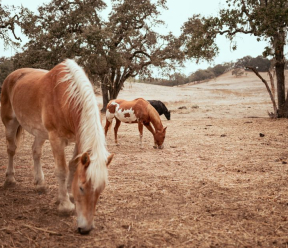

Potomac Horse Fever is a seasonal, insect-borne bacterial disease now considered endemic in Alberta, and a confirmed case in Stettler County shows the risk is real for 2026. The disease is not contagious from horse to horse, and risk concentrates around waterways where infected aquatic insects emerge. Early recognition and prompt veterinary treatment are the factors that most influence survival.
Table of Contents
-
What is Potomac Horse Fever and why is it now on Alberta’s radar?
-
Why does living near water raise the risk for Alberta horses?
-
Should Alberta horse owners vaccinate against Potomac Horse Fever?
-
Where can Alberta owners find licensed support for equine respiratory and recovery care?
What is Potomac Horse Fever and why is it now on Alberta’s radar?
Potomac Horse Fever, also called equine neorickettsiosis or equine monocytic ehrlichiosis, is a bacterial disease caused by Neorickettsia risticii, with the newer species Neorickettsia findlayensis now confirmed in Canada. According to The Horse Portal, Neorickettsia findlayensis has been confirmed in Ontario, Quebec, Alberta, and British Columbia.
The disease has a long North American history. Dr. Frank Schofield, a veterinarian in southern Ontario, first described what is now called Potomac Horse Fever as “horse cholera” or “abdominal typhoid” in 1924, according to SUCCEED Equine. The condition was first recognised under its current name in 1979 near the Potomac River in Maryland.
Potomac Horse Fever is now considered endemic in Alberta alongside Ontario, Quebec, Nova Scotia, Manitoba, and British Columbia, according to The Horse Portal. A confirmed case in Stettler County, Alberta, reported by Equine Management, brings the risk into sharp local focus for Alberta horse owners in 2026.
How do horses actually catch Potomac Horse Fever?
Horses catch Potomac Horse Fever by ingesting aquatic insects that carry Neorickettsia bacteria inside parasitic flatworms. The bacteria live within these flatworms, which infect insects such as mayflies, caddisflies, and dragonflies, according to The Horse Portal.
Infection occurs when horses graze or drink from contaminated water and swallow infected insects. Rutgers Equine Science Center describes the causative agent as water bugs carrying Neorickettsia risticii. The insects do not need to be visible for exposure to occur; they can be present in water troughs, ponds, and on pasture near waterways.
Potomac Horse Fever is not contagious from horse to horse. Isolation of an affected horse is therefore not the primary control measure, and owners do not need to separate healthy horses from a clinical case based on contagion risk. The incubation period runs approximately one to three weeks, according to SUCCEED Equine, meaning exposure may occur well before signs appear.
Why does living near water raise the risk for Alberta horses?
Horses kept within 8 kilometres of waterways face substantially higher risk of Potomac Horse Fever because of insect emergence patterns. The Horse Portal reports that proximity to water is a significant risk factor, with aquatic insects emerging from rivers, creeks, and standing water sources.
The seasonal pattern is well documented. Most Potomac Horse Fever cases are reported from July through September, and outbreaks tend to be seasonal, according to Equine Management. This timing aligns with peak insect emergence and warmer water temperatures across Alberta.
Alberta’s landscape includes many water features that can support the insect hosts. Rivers, irrigation channels, dugouts, and stocked ponds all provide habitat for mayflies, caddisflies, and dragonflies. Horses drinking from these sources or grazing adjacent pasture during summer and early autumn are exposed to the insects that transmit the bacteria.
What warning signs should owners and vets watch for?
The early warning signs of Potomac Horse Fever include mild depression, decreased appetite, fever, decreased belly sounds, and watery diarrhoea. Rutgers Equine Science Center lists these clinical signs as the key indicators that should prompt veterinary attention, particularly during the high-risk months.
Clinical signs typically last between 1 and 15 days, according to SUCCEED Equine. The severity can vary widely, and some horses may show only mild depression and inappetence before more serious signs develop. Owners who notice subtle behavioural changes should monitor temperature and gut sounds closely.
Laminitis is a major complication of Potomac Horse Fever. Studies show that about 25 to 40 percent of affected horses develop laminitis, according to The Horse Portal. Fever plus watery diarrhoea in a horse kept near water between July and September warrants urgent veterinary contact, as early intervention reduces the risk of severe complications.
How is Potomac Horse Fever diagnosed and treated in 2026?
Diagnosis of Potomac Horse Fever typically uses blood and faecal testing, including PCR. Species-specific PCR tests can distinguish between Neorickettsia risticii and Neorickettsia findlayensis, according to The Horse Portal. This distinction matters for understanding the epidemiology of cases in Alberta.
The recommended treatment is oxytetracycline administered twice daily for five days, plus an increased focus on hydration, according to SUCCEED Equine. Supportive care such as intravenous fluids is commonly required, particularly for horses with colitis and significant fluid loss from diarrhoea.
Response to treatment is usually seen within 12 to 24 hours. A study by Bertin et al in 2013 found that 73 percent of horses with PHF-associated colitis survived to discharge after a median six days in hospital, according to SUCCEED Equine. Mortality ranges from 5 to 30 percent, with the Alberta report noting a mortality rate of up to 30 percent, according to Equine Management.
Should Alberta horse owners vaccinate against Potomac Horse Fever?
Yes, vaccination is recommended for horses in endemic areas, including Alberta, though it does not provide complete protection. AAEP guidelines recommend administering PHF vaccines about a month ahead of expected cases, with two primary doses given three to four weeks apart, according to The Horse Portal.
The booster schedule depends on local risk. Vaccination is recommended every three months in endemic areas and every six to twelve months in other areas, according to SUCCEED Equine. Alberta owners should discuss timing with their veterinarian, aiming for coverage before the July to September peak season.
Vaccines against Potomac Horse Fever are not 100 percent effective, but vaccinated horses tend to have fewer and less severe clinical signs, according to Equine Management. Horses that recover from Potomac Horse Fever are typically resistant to re-infection for up to two years, according to SUCCEED Equine.
Where can Alberta owners find licensed support for equine respiratory and recovery care?
Alberta owners seeking non-pharmaceutical support for horses in training, recovery, or respiratory challenge can consider complementary options alongside veterinary care. Equine Salt Therapy offers Licensed Business Opportunities and Master Licenses for Equine, Poultry, Swine and Companion Animals, with territories sold under US Patent 11,497,593 and CA 3019046.
The pricing for Equine Salt Therapy licensed territories ranges from $110,000 to $1,000,000. These licenses are designed for practitioners, trainers, and equine businesses seeking to add a non-invasive respiratory and recovery modality to their existing services. The model operates on a territory basis, with Master Licenses available for various modalities.
Salt therapy is complementary and does not replace veterinary diagnosis or antibiotics for a suspect Potomac Horse Fever case. Any horse showing fever, diarrhoea, or depression during the high-risk season requires immediate veterinary assessment and appropriate pharmaceutical treatment, as outlined by The Horse Portal. Respiratory and recovery support can sit alongside, but never instead of, that medical response.
Key Takeaways
-
Potomac Horse Fever is caused by Neorickettsia bacteria carried inside flatworms that infect aquatic insects such as mayflies, caddisflies and dragonflies.
-
Horses become infected by ingesting contaminated insects while grazing or drinking, not from other horses.
-
Potomac Horse Fever is now considered endemic in Alberta, and a horse in Stettler County tested positive in 2026.
-
Horses kept within 8 kilometres of waterways face substantially higher risk, with cases peaking July through September.
-
Roughly 25 to 40 percent of affected horses develop laminitis, and mortality runs between 5 and 30 percent.
-
Prompt oxytetracycline and supportive care produce a 73 percent survival rate for PHF-associated colitis, with response often within 12 to 24 hours.
-
PHF vaccines are not fully effective but reduce severity, and are best given about a month before expected cases.
References
-
Understanding Potomac Horse Fever: What Every Horse Owner Should Know — The Horse Portal, 2026-03-25
-
Swimming with BUGS??!! — Rutgers Equine Science Center, 2015-09-16
-
A Complete, Modern Guide to Potomac Horse Fever — SUCCEED Equine, 2017-07-13
-
Alberta Horse Tests Positive for Potomac Horse Fever — Equine Management, 2026-08-14