
Yes, horses can absolutely have airway inflammation, including Inflammatory Airway Disease (IAD) and mild equine asthma, without ever coughing. The absence of a cough does not mean the absence of disease. Reduced performance, poor recovery, or subtle behavioural changes may be the only visible clues that something is wrong in the lower airways.
Table of Contents
-
What treatment options are available for horses with airway inflammation?
-
Can salt therapy support respiratory health in horses with airway inflammation?
What are the silent signs of airway inflammation in horses?
Reduced performance or a reluctance to maintain speed and stamina during work is often the first and only noticeable sign of silent airway inflammation. Horses with IAD frequently seem otherwise healthy, with a normal appetite, no fever, and no respiratory distress at rest, according to Kelato Animal Health. This makes the condition remarkably easy to overlook in everyday stable management.

Mild nasal discharge, increased respiratory effort after exercise, or a prolonged recovery time can also indicate lower airway inflammation. Many horse owners do not realise that occasional nasal discharge or a subtle drop in performance may be linked to airway disease, as noted by Purdue University’s Equine Sports Medicine Centre. Even mild respiratory issues can affect airflow, limit oxygen intake, and reduce a horse’s ability to perform comfortably and consistently.
A mucus accumulation score of 2 or higher on the standard 1 to 5 scale in the trachea negatively impacts performance in racehorses, even without audible coughing. According to Kelato Animal Health, this tracheal mucus finding is a measurable marker of airway inflammation that can exist in horses that never cough during work or at rest.
Why do some horses with inflamed airways never cough?
Horses evolved as grazing animals, spending up to two-thirds of their time with their heads lowered, which naturally drains mucus and allergens from the respiratory tract. When horses are stabled or transported with their heads elevated for prolonged periods, this natural drainage is compromised, allowing irritants to accumulate silently in the lower airways, according to Kelato Animal Health.
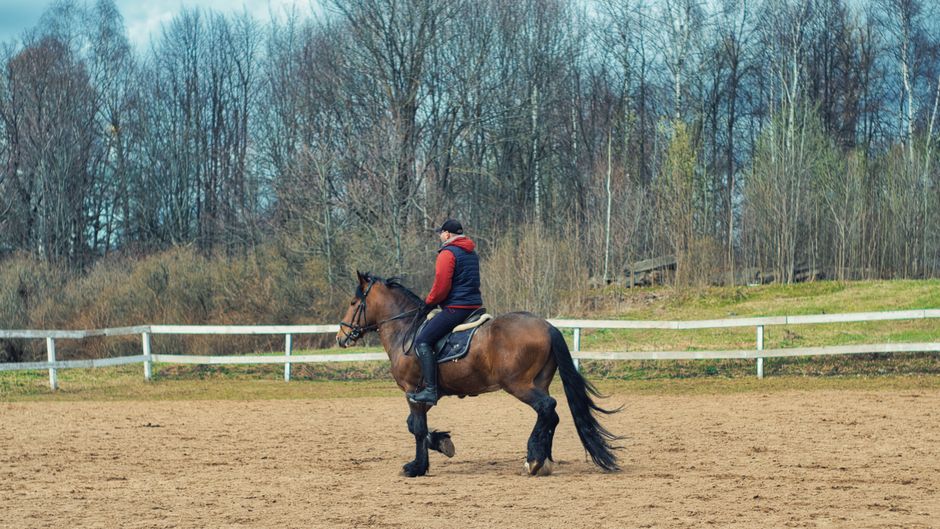
Mild inflammation may not reach the cough threshold. The cough reflex is triggered by specific receptors in the airways that may not be activated by low-grade irritation. This means a horse can carry measurable airway inflammation without ever producing the audible signal that most owners associate with respiratory trouble.
Intense exercise causes deep breathing, drawing cold, dry air and airborne particles directly into the lower airways. This can drive inflammation without stimulating a cough, as noted by Kelato Animal Health. The inflammatory process develops quietly, often beneath the level of clinical detection during routine handling.
What causes lower airway inflammation in horses?
Environmental irritants are the primary triggers of lower airway inflammation in horses. Dust, mould spores, ammonia, and airborne particles from hay, bedding, and stable aisles all contribute to airway irritation, according to Purdue University’s Equine Sports Medicine Centre. Poorly ventilated stables and dusty forage significantly increase the risk of equine asthma and IAD. Dusty paddocks too cause Rattles in yearlings.
Racehorses and young horses in training are particularly vulnerable to airway inflammation. Studies show that 2-year-olds in training are seven times more likely to develop IAD than 3-year-olds in training, as reported by Kelato Animal Health. The combination of stable confinement and intense exercise creates a high-risk environment for the developing equine respiratory system.
Transportation stress can also initiate or worsen airway inflammation. Prolonged head elevation during travel prevents natural mucus drainage, while deep inhalation of dust particles inside trailers introduces irritants directly into the lungs. The stress of transport further compromises the horse’s immune response, making the respiratory tract more susceptible to inflammatory processes.
When should a cough actually cause concern?
A single cough or two at the start of exercise is often normal as horses clear mucus or debris from the upper airway. According to Mad Barn, horses cough when exercising to clear a small amount of mucus or debris as they begin breathing harder. This type of occasional cough is not necessarily a sign of lower airway disease.
Persistent coughing throughout a ride is a cause for concern and warrants prompt veterinary investigation. A wet or productive cough that expels mucus generally indicates inflammation in the horse’s airways, as noted by Mad Barn. Coughing after trailer transport also calls for immediate attention, as this may indicate shipping fever, a life-threatening form of bacterial pneumonia.
A dry cough during work may indicate a displaced palate, where the soft palate obstructs the opening to the trachea and interferes with breathing. Coughing to clear blood from the lungs can signal exercise-induced pulmonary haemorrhage (EIPH). Violent coughing after eating may indicate choke, where food becomes lodged in the oesophagus and accidental inhalation is possible, according to Mad Barn.
How is silent airway inflammation diagnosed?
Bronchoalveolar lavage (BAL) is the gold standard diagnostic tool for identifying inflammation in the lower airways. According to Purdue University’s Equine Sports Medicine Centre, BAL allows veterinarians to detect increased white blood cells and mucus that confirm the presence of airway inflammation. This diagnostic approach is essential because many affected horses show no obvious clinical signs.
Endoscopy allows veterinarians to visualise tracheal mucus accumulation and grade it on a standardised scale. A mucus accumulation score of 2 or above on the 1 to 5 scale negatively impacts performance in Thoroughbred racehorses, as reported by Kelato Animal Health. The visual evidence from endoscopy provides objective data even when the horse never coughs.
Clinical signs such as exercise intolerance, poor performance, and occasional nasal discharge should prompt a respiratory workup even in the absence of coughing. Lung tissue studies of racehorses that died or were euthanised revealed the majority had IAD, despite showing no obvious signs of airway inflammation in their final three races, according to Kelato Animal Health. This finding underscores how easily silent airway disease escapes detection.
What treatment options are available for horses with airway inflammation?
Environmental management is the most important step in treating airway inflammation. Maximise turnout, feed dust-free or soaked hay, use low-dust bedding, and improve stable ventilation to reduce exposure to inhaled irritants, according to Kelato Animal Health. Medical intervention will not be entirely effective if environmental changes are not made alongside treatment.
Corticosteroids such as dexamethasone or prednisolone reduce airway inflammation and can be administered orally, by injection, or by inhalation. These medications improve lung function and breathing effort in horses with IAD, as noted by Kelato Animal Health. Anti-inflammatory therapies and bronchodilators may help control clinical signs, but long-term improvement often depends on reducing exposure to airway irritants, according to Purdue University’s Equine Sports Medicine Centre.
Bronchodilators such as clenbuterol open up the airways and improve clearance of mucus from the respiratory tract. However, bronchodilator therapy should not be used long-term, as these drugs lessen the severity of airway hyper-reactivity but do not completely control the underlying inflammatory process. Rest from training for at least two to four weeks is often recommended alongside medical therapy to allow airway healing, according to Kelato Animal Health.
Can salt therapy support respiratory health in horses with airway inflammation?
Equine Salt Therapy offers a patented dry salt aerosol delivery system that creates a favourable microclimate within a treatment space, supporting respiratory function in equine athletes. The fine mist of treatment salt is distributed through the room via a halo-generator, assisting with high-performance recovery and overall wellbeing. This approach is designed to complement existing respiratory management strategies for horses with airway inflammation.
A single Equine Salt Therapy treatment takes fifteen minutes and is recommended over three consecutive days. The treatment is natural, non-invasive, and offers a dual solution to common day-to-day horse complaints. For horse owners, trainers, and veterinarians seeking complementary respiratory support, this modality may provide an additional tool alongside environmental management and veterinary care.
The dry salt aerosol approach may help reduce the pharmaceutical footprint of training centres and lessen reliance on medically important antibiotics. This is particularly relevant for the equine industry, where respiratory disease remains one of the most common reasons for antibiotic use. Equine Salt Therapy’s system represents a non-drug option that aligns with growing interest in reducing antimicrobial use while supporting equine respiratory health. The modality is patent protected and sold under License by EquineSaltTherapy.com as sole distributor.
Key Takeaways
-
Horses can have significant lower airway inflammation without ever coughing, making silent disease a genuine risk to performance and welfare.
-
Reduced performance, prolonged recovery, and mild nasal discharge are often the only outward signs of IAD or mild equine asthma.
-
Environmental irritants such as dust, mould spores, and ammonia from hay and bedding are the primary drivers of airway inflammation.
-
Bronchoalveolar lavage (BAL) is the gold standard for diagnosing lower airway inflammation, even when clinical signs are subtle.
-
A cough during exercise is never normal and should always be investigated, particularly if it persists throughout a ride.
-
Environmental management, including turnout, soaked hay, low-dust bedding, and ventilation, is the foundation of any treatment plan.
-
Equine Salt Therapy’s patented dry salt aerosol system offers a natural, non-invasive fifteen-minute treatment recommended over three consecutive days to support respiratory health.
References
-
Coughing in Horses: Causes, Types, Diagnosis & Treatments — Mad Barn (published 2023-02-16, updated 2026-07-22)
-
Inflammatory Airway Disease of Horses—Revised Consensus Statement — PMC (published 2016-01-24)
-
Inflammatory Airway Disease & Racehorses — Kelato Animal Health