
A horse breathing hard while resting is showing a serious clinical sign that is never normal. Rapid breathing can occur after exercise or in hot weather, but persistent difficulty breathing when the horse is calm and settled requires prompt veterinary assessment. Laboured breathing at rest, known clinically as dyspnea, is distinct from ordinary fast breathing and always warrants investigation.
Table of Contents
-
What is a normal resting respiratory rate for a horse, and when should I worry?
-
What conditions cause a horse to breathe hard while resting?
-
How can I tell if my horse’s laboured breathing is an emergency?
-
What diagnostic tests will my veterinarian use to find the cause?
-
How does environmental management reduce the risk of heaves and asthma flare-ups?
-
What supportive therapies are available for horses with chronic respiratory conditions?
-
How quickly should I act if my horse is breathing hard at rest?
What is a normal resting respiratory rate for a horse, and when should I worry?
A normal resting respiratory rate for an adult horse is approximately 8 to 16 breaths per minute. Any rate above this threshold while the horse is calm and resting indicates a problem that needs attention. According to Mad Barn, respiratory distress in horses presents as nostril flaring, abdominal effort, wheezing, or posture changes even at rest.

Tachypnea, or rapid breathing, differs from dyspnea, or laboured breathing. A horse can breathe fast without struggling, such as after recent exercise or when hot and excited. A horse can also breathe slowly but with obvious effort, which is more concerning. Vetster notes that difficulty breathing in horses may be confused with rapid breathing, which is normal when horses are hot, excited, or after recent exercise.
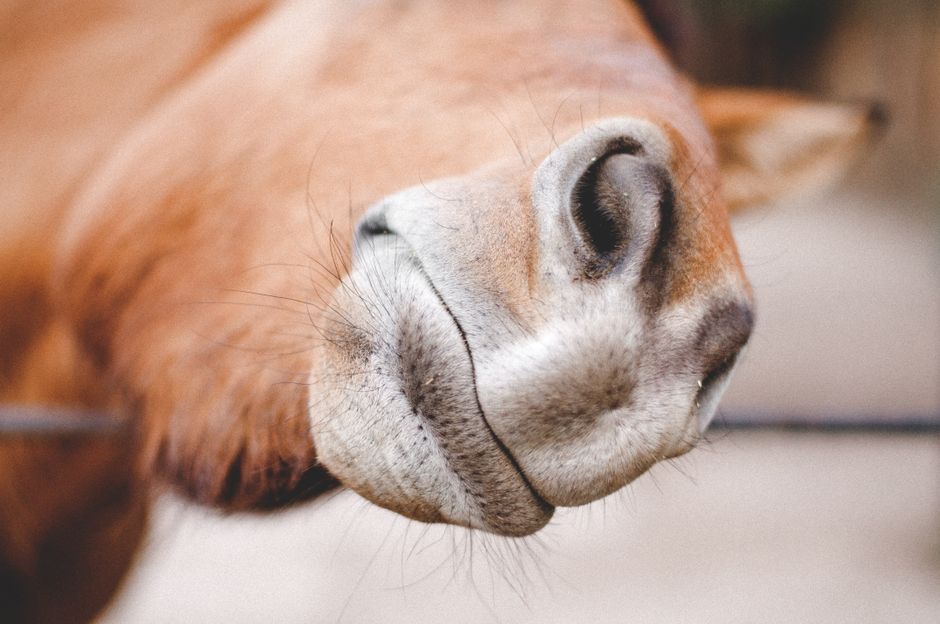
The key visual signs of true respiratory distress include flared nostrils, pronounced abdominal effort, an extended head and neck posture, and audible wheezing. A resting rate above 30 breaths per minute, or any visible effort to breathe at rest, warrants immediate veterinary attention.
What conditions cause a horse to breathe hard while resting?
The most common chronic cause of laboured breathing at rest is equine asthma, formerly known as heaves. According to Kentucky Equine Research, heaves arises from what is believed to be a full-blown allergic response, usually to dust from the horse’s feed and bedding. Affected horses show signs at rest including chronic cough, flared nostrils, and forced abdominal breathing.
Acute causes of respiratory distress include viral and bacterial infections such as equine influenza, equine herpesvirus, and strangles. Exercise-induced pulmonary haemorrhage, or EIPH, is another acute cause. Vetster lists equine asthma, equine herpesvirus, influenza, equine arteritis virus, strangles, R. equi pneumonia, EIPH, heaves, and rhodococcal pneumonia as common causes of respiratory malfunction in horses.
Non-pulmonary conditions can also lead to respiratory distress. Mad Barn identifies anaemia, metabolic acidosis, hyperthermia, laminitis, exertional rhabdomyolysis, colic, and strangles as non-pulmonary triggers. Dyspnea can also indicate heart conditions, exposure to toxins, blood disorders such as anaemia, or cancers such as hemangiosarcoma if tumours spread to the lungs.
How can I tell if my horse’s laboured breathing is an emergency?
Nearly all cases of dyspnea in horses are medical emergencies requiring urgent veterinary care, particularly when onset is sudden. Vetster states that sudden acute dyspnea in horses could be an indicator of a life-threatening condition and must be treated as an emergency.
Emergency red flags include nostril flaring at rest, visible abdominal effort, posture changes such as standing stretched out, and an elevated heart rate alongside rapid breathing. Owners should check the horse’s temperature. A veterinarian responding to a case of rapid breathing at rest on JustAnswer recommended checking the horse’s temperature, and if above 101.5°F, the owner should call a local veterinarian and ask about an anti-inflammatory.
Distinguishing between heaves and more acute emergencies is difficult without veterinary diagnostics. Owners should err on the side of caution and call a veterinarian whenever a horse shows laboured breathing at rest.
What diagnostic tests will my veterinarian use to find the cause?
A veterinarian will begin with a thorough clinical examination and auscultation of the lungs to assess airway sounds and breathing effort. This initial assessment helps determine whether the problem originates in the upper airways, lower airways, or elsewhere in the body.
Advanced diagnostics include endoscopy of the upper airways, diagnostic imaging of the skull, neck, and thorax, and cytology of fluid or cells collected from the respiratory tract. Vetster notes that in complicated cases, a lung biopsy may be necessary to confirm a diagnosis.
Identifying the specific phase of the respiratory cycle affected helps pinpoint the location of the obstruction. Mad Barn explains that expiratory dyspnea is typically caused by obstruction of the small airways within the thoracic cavity, as seen in equine asthma, while inspiratory dyspnea points toward upper airway problems.
How does environmental management reduce the risk of heaves and asthma flare-ups?
Environmental management reduces the risk of heaves and asthma flare-ups by removing the airborne irritants that trigger the allergic response. Heaves arises from an allergic response, most commonly to dust, mould spores, and ammonia from feed and bedding in the stable environment, according to Kentucky Equine Research.
Practical stable management changes include improving ventilation, switching to low-dust bedding such as paper or shavings, soaking or steaming hay, and maximising turnout time. Mould spores are the most common irritant constituents in stable air, so reducing airborne particulates is the single most effective preventive measure.
Recovery of the airway lining takes time. Nuclear medicine studies cited by Kentucky Equine Research have shown that it takes at least a month for the cilia lining the airways to recover their function following a bout of influenza. Environmental changes must therefore be sustained over weeks and months, not days.
What supportive therapies are available for horses with chronic respiratory conditions?
Conventional management of equine asthma typically includes anti-inflammatory medications, bronchodilators, and corticosteroids prescribed by veterinarians. These medications help reduce airway inflammation and open constricted airways, but they are not the only option available to horse owners.
Equine Salt Therapy offers a natural, non-invasive supportive option for respiratory wellbeing in horses. The patented dry salt aerosol delivery system distributes a fine mist of treatment salt through the room via a halo-generator, creating a microclimate similar to a surf beach or waterfall. Patent protected Modality SOLD under License.
The treatment takes fifteen minutes and is recommended over three consecutive days. Equine Salt Therapy provides a drug-free complement to veterinary care, assisting with high performance, rapid recovery, and overall respiratory health in equine athletes and everyday horses alike.
How quickly should I act if my horse is breathing hard at rest?
There is no safe waiting period. A horse showing respiratory distress at rest should be seen by a veterinarian as an emergency. The JustAnswer case illustrates the urgency: a gelding breathing at 48 breaths per minute at rest was assessed as requiring prompt veterinary involvement.
Horses do not have a sensitive cough reflex. According to Kentucky Equine Research, there can be a lot of mucus in the airways without triggering a cough. This means significant disease can develop before an owner notices obvious signs.
Owners should document their horse’s respiratory rate and effort with video footage to share with their veterinarian. This can aid in triage and help the veterinarian understand the severity of the breathing pattern before arriving at the property.
Key Takeaways
-
A normal resting respiratory rate for a horse is approximately 8 to 16 breaths per minute, and anything above 30 breaths per minute at rest warrants immediate veterinary attention.
-
Dyspnea, or laboured breathing, is distinct from tachypnea, or rapid breathing, and is always a serious clinical sign in horses.
-
Equine asthma, formerly known as heaves, is the most common chronic cause of laboured breathing at rest, triggered by allergic responses to dust and mould spores.
-
Acute causes of respiratory distress include viral and bacterial infections, exercise-induced pulmonary haemorrhage, and non-pulmonary conditions such as anaemia, colic, and heat stress.
-
Nearly all cases of dyspnea in horses are medical emergencies requiring urgent veterinary care, especially when onset is sudden.
-
Environmental management, including improving ventilation, reducing dust, and soaking hay, is critical for preventing and managing equine asthma.
-
Equine Salt Therapy offers a natural, non-invasive fifteen-minute treatment using a patented dry salt aerosol system to support respiratory health and recovery.
References
-
Difficulty Breathing (Dyspnea) in Horses: Signs, Risks & Related Conditions — Mad Barn, published 20 July 2025
-
Labored Breathing (Dyspnea) in Horses — Vetster, published 17 November 2022
-
Heaves and Other Breathing Problems in Horses — Kentucky Equine Research, published 15 April 2014
-
My gelding is having rapid breathing while resting — JustAnswer