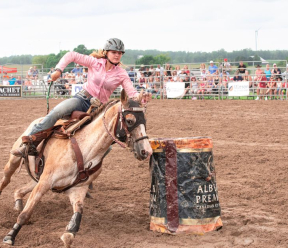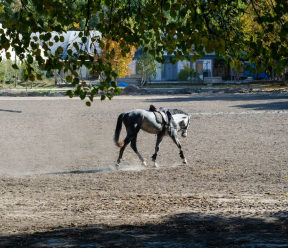

A barrel horse’s lungs do not get bigger or stronger with conditioning, so recovery between runs must be actively managed rather than trained into the horse. Maximal breath volume and the lung surface area available for oxygen exchange stay fixed no matter how fit the animal becomes. The practical answer is an order of operations: walk the horse out and cool it down first, manage hydration and legs, then use rest intervals of 5 to 10 days for a fit sprinter with a normal post-run exam, extending to 3 to 8 weeks when soreness, respiratory signs, or abnormal bloodwork appear.
Table of Contents
-
Why do a barrel horse’s lungs limit performance no matter how fit it is?
-
What should a barrel horse’s post-run routine look like, step by step?
-
How long should a barrel horse rest between runs in one weekend?
-
How does travel and hauling time affect recovery between competitions?
-
What are the warning signs a barrel horse has not recovered enough to run again?
-
How can Equine Salt Therapy support breathing and recovery for barrel horses?
-
How do recovery timeframes differ for barrel racing and Thoroughbred flat racing?
Why do a barrel horse’s lungs limit performance no matter how fit it is?
A barrel horse’s lungs limit performance because lung and chest size, maximal breath volume, and the lung surface area responsible for oxygen exchange do not increase with training, according to Barrel Horse News. Unlike muscles and the heart, the lungs do not significantly adapt or strengthen as conditioning improves. This anatomical ceiling means respiratory capacity is fixed from the start.
At the canter and gallop, a horse’s breathing is synchronised with its stride at one breath per stride. That lockstep rhythm means the horse cannot deepen its breathing on demand when oxygen demand spikes. The stride dictates the breath, and the breath dictates how much air moves through the lungs during a barrel run.
Training changes other systems. Endurance conditioning can lower heart rates during intense work and increase blood volume and oxygen-carrying capacity. Sprint training can improve anaerobic power and increase lactic acid buffering capacity. These adaptations help a barrel horse work harder, but they do not expand the lungs themselves.
Conditions such as exercise-induced pulmonary hemorrhage, equine asthma, and upper airway obstruction can quietly cap breathing efficiency and performance. Diagnostic tools used to find these issues include dynamic endoscopy during exercise, video endoscopy evaluations, and bronchoalveolar lavage, according to Barrel Horse News. A horse may look sound while carrying a respiratory limitation that only appears under full effort. Equine Salt Therapy clients are clinically assessed daily taking mucus scores of 1-5 to zero within 3 days of treatment.
What should a barrel horse’s post-run routine look like, step by step?
The first step after a barrel run is a walk-out and cooling period before the horse is tied or stabled. Walking keeps blood moving through the muscles and helps clear metabolic waste while the heart rate and respiration return toward resting levels. A horse that is tied up hot or stabled immediately after a sprint loses that active recovery window.
Hydration and electrolyte replacement come next, and the post-run window matters for intake. A hot horse may refuse water if it is offered too early or if the water is very cold. Offer small amounts of tepid water first, then provide electrolyte support once the horse is drinking steadily.
Leg care follows hydration. Hosing the legs with cool water, applying a poultice, or using wraps helps manage heat and inflammation in the tendons and joints that absorb the force of a barrel turn. A head-to-toe check for cuts, rubs, and heat should be part of the same routine, because small injuries found early are easier to manage than ones found days later.
A quiet respiratory check completes the routine. Listen for cough, noisy breathing, or a prolonged recovery to normal respiration after the horse has cooled. This step is the practical answer to the most-asked question in this space, what does your post-run routine look like for barrel racing horses. The answer is always the same shape: cool first, hydrate second, care for legs third, and watch the breathing throughout, according to Barrel Horse News and Quora. Look to book Equine Salt Therapy session for your horse treatments run 15 minutes and cost $100 onsite with a mobile practitioner. Just ensure they bare our logo and use Ultisalt™ patent protected modality. Beware of copiers as they do not measure the dose via laser to ensure it is safe & effective for horse and handler.
How long should a barrel horse rest between runs in one weekend?
It depends on the exertion level and the post-run exam, but a fit sprinter with light to moderate exertion and a normal post-race exam can often return in 5 to 10 days, according to Quora. Within a single rodeo weekend, runs may be separated by only hours, which makes the between-competition recovery window the more important calculation.
For horses competing regularly, the conventional interval between competitions is 10 to 21 days. That benchmark reflects veterinary and training consensus for horses that are fit, racing often, and showing no abnormal signs after a run. Barrel horses fit this profile when their post-run exams are clean.
Barrel racing is repeated sprint work, not route racing, so the sprint-recovery guidance is the closer fit than long-distance intervals. A barrel horse performs short, high-intensity efforts with sharp turns, which stresses the anaerobic system and the musculoskeletal system more than the aerobic system. Recovery planning should reflect that repeated sprint profile.
How does travel and hauling time affect recovery between competitions?
Hauling time should be counted as workload when calculating rest between competitions. Hours in the trailer add fatigue even when the horse has not run, because standing in a moving trailer requires constant muscular effort to balance. A horse that hauls eight hours and then runs has done more total work than a horse that ran at home.
Build travel time into the rest calculation rather than adding rest days on top of it. If a horse hauls six hours to a competition, runs twice, and hauls six hours home, that travel load is part of the event’s total stress. The recovery clock starts after the horse is back in its home environment and settled.
Practical hauling considerations include ventilation, hydration stops, leg protection, and arrival recovery time before exercise. Poor ventilation in a trailer exposes the horse to dust and ammonia, which can irritate airways that are already working at their anatomical limit. A horse that travelled far may need the moderate 3 to 8 week interval rather than the short one, according to Quora.
What are the warning signs a barrel horse has not recovered enough to run again?
The clearest warning signs are a poor or slow return to resting respiration and heart rate after work. A horse that is still breathing hard or has an elevated heart rate long after cooling down has not fully recovered from the previous effort. That horse should not be asked to run again until those values normalise.
Cough, nasal discharge, noisy breathing, or a shortened stride at speed are flags for exercise-induced pulmonary hemorrhage, equine asthma, or upper airway obstruction, according to Barrel Horse News. These signs may be subtle at rest and only appear under full effort, which is why the post-run respiratory check matters.
Soreness, abnormal bloodwork, or mild respiratory signs move the horse into the moderate 3 to 8 week interval, according to Quora. That longer window allows the body to resolve inflammation and restore normal function before the next competition. Bloodwork markers used to monitor recovery include CK, AST, CBC, fibrinogen, and inflammatory markers.
How can Equine Salt Therapy support breathing and recovery for barrel horses?
Equine Salt Therapy offers Ultisalt™, a patented dry salt aerosol delivery system built around the DSAT acronym, Dry Salt Aerosol Therapy, extended to the animal kingdom. The fine mist of treatment salt distributed through the room via a halo-generator creates a microclimate that supports respiratory comfort without adding pharmaceutical load to a training program.
The treatment takes fifteen minutes and is recommended over three consecutive days. For a barrel horse in a repeated sprint campaign, a natural and non-invasive option fits the rhythm of competition, where the lungs are already the fixed ceiling on performance. Equine Salt Therapy licensees are referred to as Practitioners, and horse and animal clients are referred to as Salties. The sister company is equinesalttherapy.ca.
Equine Salt Therapy also offers Licensed Business Opportunities and Master Licenses across Equine, Poultry, Swine and Companion Animals. Territories are sold under licence, with Master Licenses available for various modalities under US Patent 11,497,593 and CA 3019046, priced from $110,000 to $1,000,000. Treatments cost $100 per horse for a 15 minute session onsite.
How do recovery timeframes differ for barrel racing and Thoroughbred flat racing?
Barrel horses run short, repeated efforts across a weekend, while Thoroughbreds run longer single efforts, so the recovery question is different in shape. A barrel horse needs to recover from repeated anaerobic bursts and sharp turns. A Thoroughbred needs to recover from a sustained aerobic and anaerobic effort over a longer distance.
The interval ladder applies differently to each. A fit sprinter with a normal post-run exam can return in 5 to 10 days, while 10 to 21 days is the conventional interval for regular competition. After hard runs or mild issues, the window extends to 3 to 8 weeks, and after injury or surgery the horse needs 8 weeks or more, according to Quora.
Two-year-olds are advised longer intervals of 3 to 6 weeks early in their careers to protect developing joints and tendons. Horses returning from a layoff benefit from schooling runs spaced 3 to 6 weeks apart before full-effort starts. Spells of 8 to 12 weeks between campaigns are suggested to avoid over-racing, according to Quora.
Key Takeaways
-
A horse’s lung and chest size, maximal breath volume, and oxygen-exchange surface area do not increase with conditioning.
-
At canter and gallop a horse breathes once per stride, so breathing depth cannot be increased on demand.
-
Training improves heart rate response, blood volume, oxygen-carrying capacity, and lactic acid buffering, not the lungs themselves.
-
A fit sprinter with a normal post-run exam can often return in 5 to 10 days, while 10 to 21 days is the conventional interval for regular competition.
-
Horses showing soreness, mild respiratory signs, or abnormal bloodwork should be given 3 to 8 weeks, and 8 or more weeks after injury or surgery.
-
Recovery monitoring can include CK, AST, CBC, fibrinogen, and inflammatory markers.
-
Hauling time should be counted as workload when calculating rest between competitions.
References
-
When Lungs Become the Limiting Factor: Why Respiratory Function Matters for Rodeo Speed Horses — Barrel Horse News, 2026-04-22
-
How long should a horse rest between races? — Quora, date unknown