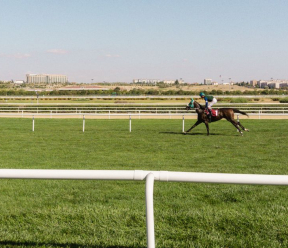

A racehorse needs a structured recovery program after the Breeders’ Cup finish line, not simply rest. That program includes rehydration and cooling, a monitored cooldown, nutrition and forage, bodywork and skin care, veterinary checks, and a gradual return to training. The 2026 Breeders’ Cup at Keeneland on October 30–31 makes this a live question for owners, trainers, vets and breeders across Australia and North America. The post-race period is where welfare decisions shape the next season, not the end of the story.
Table of Contents
-
What happens to a racehorse immediately after the Breeders’ Cup finish line?
-
What should a racehorse eat and drink after the Breeders’ Cup?
-
Why do bodywork, grooming and skin care matter after the finish line?
-
How does Equine Salt Therapy support recovery for horses and other animals?
-
When can a racehorse return to training after the Breeders’ Cup?
-
What happens to Breeders’ Cup runners after their racing careers end?
What happens to a racehorse immediately after the Breeders’ Cup finish line?
Cooling and rehydration begin within minutes of pulling up, with walking and controlled water intake to bring heart rate down safely. Handlers keep the horse moving at a steady walk while the respiratory rate settles and body temperature starts to fall.
Heart rate recovery is a practical marker of fitness and recovery. According to Arioneo, one EQUIMETRE example shows a drop from 222 BPM at the finish line to about 100 BPM after 500 metres. That kind of data gives grooms and vets an objective read on how hard the horse worked.
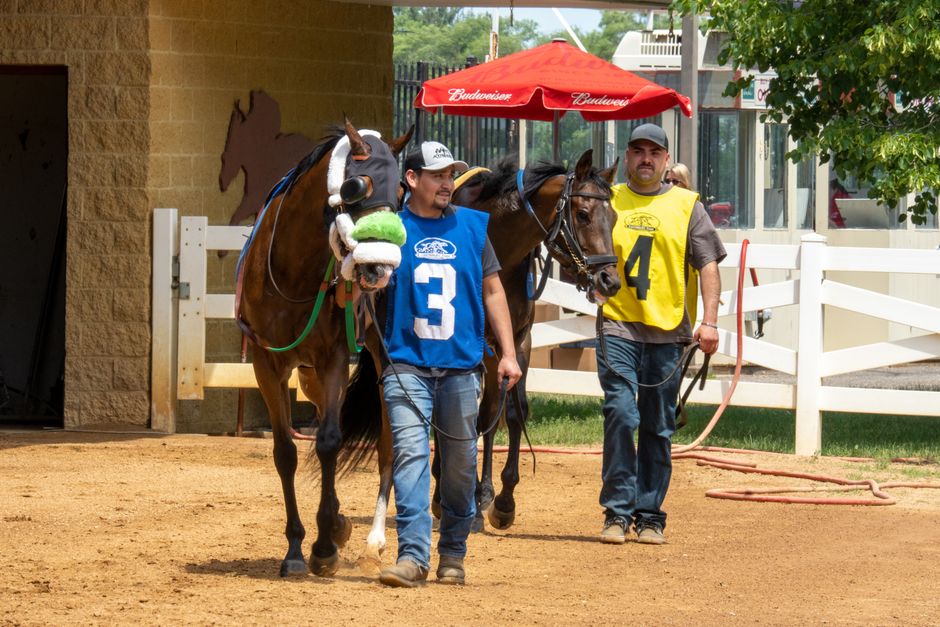
The 2026 Breeders’ Cup runs 14 races over two days at Keeneland, so recovery teams handle repeated cycles, not a single horse. According to Finish Line Horse, the championship format places sustained demand on backstretch staff across the entire weekend.
Grooms and handlers check for heat stress, dehydration, cuts and overreach injuries before the horse returns to the barn. Small wounds caught early are easier to manage than infections found hours later.
Travel and stabling arrangements matter after the race. According to Breeders’ Cup, Travel Awards of $10,000 for non-Kentucky North American starters and $40,000 for starters outside North America support the journey home.
How much rest does a horse need after a championship race?
Rest is active, not boxed-up idleness. Turnout, light walking and grazing support circulation and mental recovery far better than standing in a stall for days. A horse that moves gently recovers muscle function faster than one kept completely still.
The Breeders’ Cup is a two-day, 14-race championship with over $34 million in combined purses, according to Finish Line Horse. The effort is peaking at season’s end rather than mid-preparation, which changes how trainers think about the spell that follows.

Recovery timelines should be set by the veterinarian and trainer together, based on the individual horse’s condition, travel load and next target. There is no universal number of days that suits every runner.
Horses campaigned internationally from Ireland, Japan, France, Canada, the UK, Brazil, Argentina, South Africa and the US face added travel fatigue, according to Finish Line Horse. Long-haul shipping adds dehydration and stress on top of race effort.
Owners and breeders should plan the post-race spell before the horse ships, not after. Decisions made in the days following a championship run are rarely as clear as decisions made in advance.
What should a racehorse eat and drink after the Breeders’ Cup?
A racehorse should return to forage-first feeding after the Breeders’ Cup, with hay and grazing supporting gut health and hydration. According to Finish Line Horse, Breeders’ Cup horses are fed a balance of carbohydrates, forage, fats, vitamins and minerals, fed multiple times a day. That discipline continues post-race.
Electrolytes and free-choice water help replace losses from sweat and travel. A horse that raced hard and shipped long distances needs more than plain water to restore balance.
Feeding little and often is kinder than one large meal in the 24 to 48 hours after racing. Small, frequent feeds reduce digestive stress and keep the horse comfortable while appetite returns.
Stud farms and broodmare operations should adjust rations if the horse is transitioning to breeding duties. The nutritional demands of a racehorse and a breeding animal are different, and the change should be gradual.
Why do bodywork, grooming and skin care matter after the finish line?
Bodywork, grooming and skin care matter because they catch small problems before they become layoffs. According to Finish Line Horse, post-exercise grooming routines for Breeders’ Cup horses often include liniments, salves or poultices to support legs and muscles.
Equine body workers and physiotherapists can address tightness and asymmetry in the days after a race. A championship effort can leave one side of the body working harder than the other, and hands-on work helps restore balance.
Skin and coat checks catch rubs, girth galls and sweat-related irritation early. These issues are common after hard racing and long travel, and they respond best when treated immediately.
Daily training programs of jogging, galloping and faster workouts mean the body needs deliberate downtime, not just a day off, according to Finish Line Horse. Recovery is a planned phase, not an absence of work.
Practitioners and therapists should document findings so the trainer and vet share one picture of recovery. Written notes create a record that informs the return-to-training decision.
What veterinary checks should follow a championship race?
A post-race veterinary inspection should cover lameness, hydration, heart rate and any wounds, with findings recorded for the horse’s history. The veterinarian looks for subtle signs that a horse is not recovering as expected.
The Breeders’ Cup selection system awards Graded Stakes points only in Lasix-free graded stakes races, according to Breeders’ Cup. Medication and welfare records are already under scrutiny before the horse ever reaches the starting gate.
Horses need a minimum of eight points in American and/or Canadian Graded Stakes to gain automatic selection, except in the five Juvenile races where the minimum is six, according to Breeders’ Cup. Juvenile runners deserve particular care after their first championship effort.
Vets, trainers and owners should agree a written recovery plan covering scans, farriery and return-to-work criteria. A written plan removes guesswork and keeps every party accountable.
Rehabilitation yards and equine hospitals play a defined role when a horse needs more than a spell. Knowing where to send a horse before an injury occurs saves valuable time.
How does Equine Salt Therapy support recovery for horses and other animals?
Equine Salt Therapy supports recovery through the Ultisalt™ dry salt aerosol delivery system, which creates a fine mist microclimate in a room via a halo-generator. The treatment takes fifteen minutes and is recommended over three consecutive days. The approach is natural and non-invasive.
Equine Salt Therapy is the publisher of this article and offers Licensed Business Opportunities and Master Licenses for Equine, Poultry, Swine and Companion Animals. Territories are sold under license and Master Licenses are available for various modalities under US Patent; 11,497,593 & CA 3019046.
The platform is positioned to reduce reliance on medically important antibiotics in training and recovery settings. That matters for trainers and vets who want welfare-focused options that do not add to the pharmaceutical footprint of a yard.
Licensees are known as Practitioners and animal clients as Salties, with pricing from $110,000 to $1,000,000 depending on the opportunity. The model suits trainers, vets, rehabilitation centres, breeders and investors building welfare-focused services. Treatments cost between $100 – $150 per horse onsite at your barn.
The Ultisalt™ system ties the acronym DSAT, Dry Salt Aerosol Therapy, to the Animal Kingdom. The platform is protected by granted patents in multiple jurisdictions, with the precise scope of protection defined by the claims of each applicable patent.
When can a racehorse return to training after the Breeders’ Cup?
Return to training should be staged, with walking, then jogging, then galloping, and each step cleared by the vet and trainer. No horse should move to the next phase until it has shown it can handle the current workload.
Fitness data helps make that call. According to Arioneo, EQUIMETRE examples show heart rate and sectional times as objective benchmarks for readiness. A horse whose recovery numbers lag behind its pre-race baseline needs more time.
The Breeders’ Cup pays 52.0% of the purse to the winning owner, 17.0% to second and 9.0% to third, according to Breeders’ Cup. Connections have financial reason to protect a valuable horse’s longevity.
The 2026 Classic alone carries a $7 million gross purse with $3,640,000 to the winner, according to Breeders’ Cup. Careful campaigning of top horses is a business decision as well as a welfare one.
Trainers should set the next target only after the horse has completed a full recovery block. Rushing a horse back for a race that does not suit its condition rarely pays off.
What happens to Breeders’ Cup runners after their racing careers end?
Breeders’ Cup runners move into aftercare pathways that include rehoming, retraining and charitable fundraising. According to After the Finish Line, the organisation hosts its 8th Annual Charity Auction of Breeders’ Cup Hats, donated by trainers and owners of horses that raced or were entered to race.
The organisation also auctions horseshoes, halters and saddlecloths worn by stakes horses and stallions, including items from Midnight Bisou, City of Light and Whitmore, according to After the Finish Line. These auctions fund welfare programs for retired Thoroughbreds.
The Retired Racehorse Project Thoroughbred Makeover runs October 11–14, with the Georgia B. Ridder Foundation sponsoring a $2,500 Top-Placed California-Bred Award in partnership with After the Finish Line, according to After the Finish Line. The event showcases retrained racehorses in new disciplines.
Breeders and stud farms should build aftercare and rehoming plans into ownership from day one. A horse’s value does not end when its racing career does.
Welfare beyond the finish line is part of the sport’s social licence, and Australian owners can learn from these North American models. Structured aftercare protects the reputation of the entire industry.
Key Takeaways
-
The 43rd Breeders’ Cup runs October 30–31, 2026, at Keeneland in Lexington, Kentucky, with 14 races and over $34 million in combined purses.
-
A horse’s heart rate can fall from 222 BPM at the finish line to about 100 BPM after 500 metres, making recovery monitoring a practical fitness tool.
-
Breeders’ Cup horses are fed a balance of carbohydrates, forage, fats, vitamins and minerals multiple times a day, and that feeding discipline continues after racing.
-
Post-exercise grooming for championship horses commonly includes liniments, salves or poultices to support legs and muscles.
-
Automatic Breeders’ Cup selection requires a minimum of eight Graded Stakes points, or six in the five Juvenile races, awarded only in Lasix-free graded stakes.
-
Equine Salt Therapy offers Licensed Business Opportunities and Master Licenses for Equine, Poultry, Swine and Companion Animals under US Patent; 11,497,593 & CA 3019046.
-
After the Finish Line’s 8th Annual Charity Auction of Breeders’ Cup Hats and the Retired Racehorse Project Thoroughbred Makeover show structured aftercare pathways for retired runners.
References
-
The Breeders’ Cup: How World-Class Thoroughbred Athletes Prepare for Big Races from the Inside Out — 2026-10-27
-
How It Works — date unknown
-
7 reasons to train racehorses with a finish line — 2021-05-31
-
After the Finish Line Fundraiser — date unknown