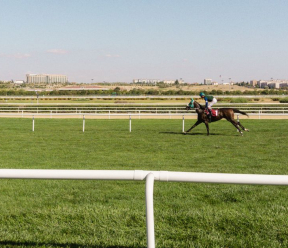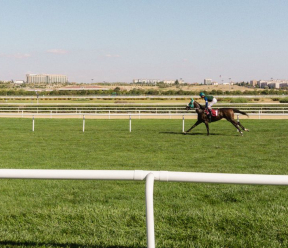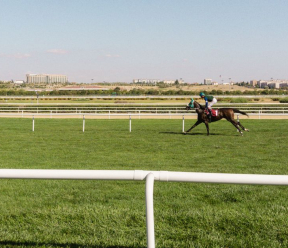

Yes, a racehorse can absolutely bleed without showing any blood at the nostrils. In the vast majority of exercise-induced pulmonary haemorrhage (EIPH) cases, blood sits deep in the trachea and lower airways where only an endoscope or bronchoalveolar lavage will find it. Roughly 90% of Thoroughbred and Standardbred racehorses bleed to some degree in the lungs, yet only about 2% ever show blood at the nose, according to VetZone. This guide is written for owners, trainers, veterinarians and equine body workers who want to ask the right questions about hidden bleeding.
Table of Contents
-
What does it mean when a racehorse bleeds without showing blood?
-
How does a vet confirm EIPH if there is no blood at the nose?
-
Where can stables and practitioners find a non-invasive support option?
What does it mean when a racehorse bleeds without showing blood?
Exercise-induced pulmonary haemorrhage means bleeding into the lungs during intense exercise. The blood does not always travel far enough up the airway to appear at the nostrils.
A hidden bleeder is a horse with blood confined to the trachea and lower airways. This blood is detectable only by endoscopy or bronchoalveolar lavage, typically between 30 and 120 minutes after exercise, according to Understanding EIPH.

Australian racing rules add another layer. Under AR53A(1), bleeding is officially defined as the appearance of blood at both nostrils after exercise, unless the Stewards decide external trauma caused it, according to Racing.com. A horse can therefore have significant EIPH and never be recorded as a bleeder.
Timing also matters. Endoscopy may not reveal haemorrhage unless the examination is performed 60 minutes or more after exercise, the same Racing.com source notes.
How common is EIPH in racehorses?
EIPH is remarkably common in racehorses. Estimates suggest 43 to 75% of Thoroughbred racehorses experience episodes of EIPH, with some researchers believing the figure can climb as high as 95%, according to Understanding EIPH.
Around 90% of Thoroughbred and Standardbred racehorses bleed to varying degrees in the lungs, but only about 2% show blood at the nostrils, VetZone reports.
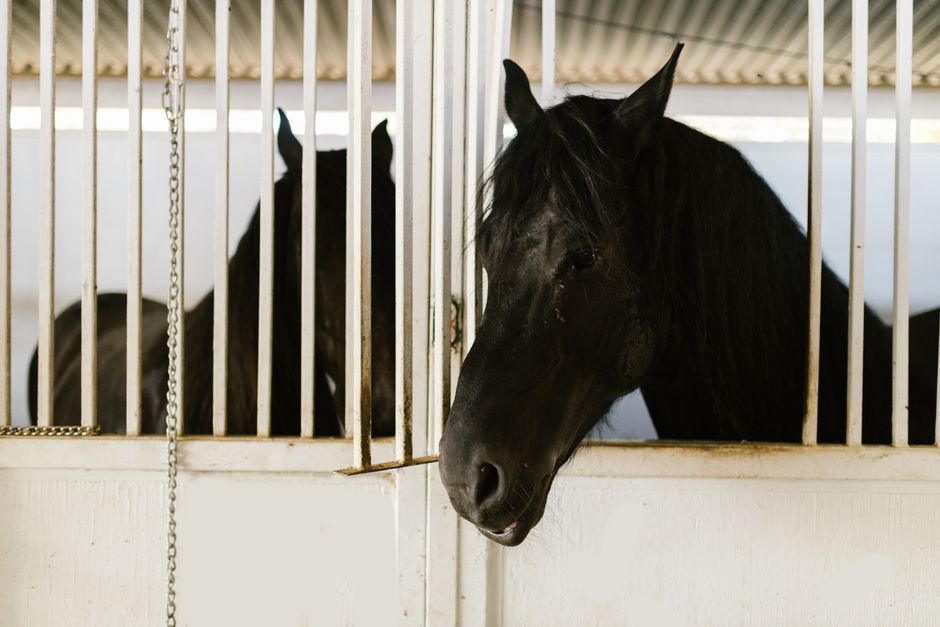
A Victorian study found 55.3% of starters had some degree of EIPH on post-race endoscopic examination. First-time epistaxis prevalence in Victoria is roughly 1.5 per 1000 starters, or 0.15%, according to Racing.com.
A retrospective study of 1,567 Thoroughbred racehorses and 3,794 observations graded bleeding on a 0 to 4 scale. The grade distribution was 31.6% grade 1, 17.2% grade 2, 5.1% grade 3, and 1.2% grade 4, according to Kentucky Equine Research.
Why do horses bleed into their lungs during fast work?
The leading theory is exercise-induced pulmonary hypertension causing alveolar capillary stress failure. This is a mechanical failure of the thin blood-gas barrier under high capillary pressure combined with high negative airway pressure during intense exercise, according to Understanding EIPH.
Pulmonary artery blood pressures in horses during maximal exercise can reach up to 150 mmHg. Elite human athletes and racing greyhounds reach around 40 mmHg by comparison, VetZone notes.
Several contributing factors are proposed. A large heart capable of high cardiac output, heart rates above 200 bpm and typically 240 bpm, pulmonary capillaries unable to contain blood at high pressures, and increased blood viscosity from splenic contraction all play a role, according to Understanding EIPH.
Ground-strike impact is not the sole trigger. Horses can bleed when swimming, an exercise that does not induce ground-strike impact, according to Racing.com.
Does hidden bleeding actually affect race-day performance?
It depends on the grade. Australian research found no association between mild to moderate haemorrhage and inferior race-day performance, with minimal effects documented for grades 1 and 2, according to Kentucky Equine Research.
Higher grades tell a different story. Horses with grade 3 or 4 haemorrhage were significantly more likely to have a lower finishing position, less likely to place in the first three, less likely to collect race earnings, finish further behind the winner, and be slower over the final 600 metres, the same Kentucky Equine Research source reports.
Severe grade 4 EIPH may also be associated with shorter racing careers, according to Understanding EIPH.
Most horses with blood at both nostrils finish worse than mid-field, Racing.com notes.
How does a vet confirm EIPH if there is no blood at the nose?
A veterinarian confirms hidden EIPH primarily through endoscopy or bronchoalveolar lavage. Endoscopy within two hours of a trial or race can reveal visible traces of blood in the throat and upper and lower windpipe areas, according to VetZone.
Timing matters. Endoscopy may not reveal haemorrhage unless performed 60 minutes or more after exercise, Racing.com states. Bronchoalveolar lavage between 30 and 120 minutes after exercise samples the lower airways where hidden blood sits, according to Understanding EIPH.
Vets grade EIPH on a 0 to 4 scale, and that grade shapes prognosis and management advice, according to Kentucky Equine Research. Owners should ask their vet when the scope was done, what grade was found, and whether a re-scope after the next gallop is warranted.
What should you do for a horse with EIPH?
Horses showing blood at the nostrils, or confirmed by scoping or bronchoalveolar lavage to be severe hidden bleeders, should be given two to three months rest before returning to training, according to VetZone.
Frusemide is the only medication proven beneficial for EIPH by exhaustive scientific studies. Its long withdrawal time means it has no benefit on race day, and it is not an approved race-day medication in Australia, the same VetZone source notes.
Controlled studies have not been carried out to evaluate the benefit of nutritional bleeder treatments based on vitamin A, vitamin E, vitamin K, rutin, vitamin C and herbal mixtures. Claims about these products deserve scrutiny, VetZone advises.
Repeated bleeding causes airway inflammation, fibrosis and chronic change in the lung, which can contribute to further haemorrhage, according to Racing.com. Reducing exposure matters for long-term lung health.
Where can stables and practitioners find a non-invasive support option?
Equine Salt Therapy offers a natural, non-invasive protocol that some stables discuss with their veterinarian as a complementary management tool alongside diagnosis. The treatment takes fifteen minutes and is recommended over three consecutive days.
The patented dry salt aerosol delivery system, known as Ultisalt™, creates a fine mist of treatment salt distributed through the room via a halo-generator. Equine Salt Therapy states this microclimate is designed to support high performance, rapid recovery and wellbeing while reducing reliance on medically important antibiotics.
For breeders, stud farms and investors, Equine Salt Therapy offers Licensed Business Opportunities and Master Licenses for Equine, Poultry, Swine and Companion Animals. Territories are sold under license, with master licenses available for various modalities under US Patent 11,497,593 and CA 3019046.
The register here is factual and non-comparative. Dry salt aerosol therapy is positioned as something to discuss with a veterinarian, not as a diagnosis or a cure for EIPH.
Key Takeaways
-
A racehorse can have significant lung bleeding with zero blood at the nostrils, and only scoping or bronchoalveolar lavage reveals it.
-
Roughly 90% of Thoroughbred and Standardbred racehorses bleed to some degree in the lungs, but only about 2% show blood at the nose.
-
Australian rules define bleeding as blood at both nostrils after exercise, so hidden EIPH often goes unrecorded.
-
Pulmonary artery pressures reach about 150 mmHg in maximal equine exercise, versus around 40 mmHg in elite human athletes.
-
Mild to moderate grade 1 to 2 EIPH showed minimal performance effects in Australian research, while grades 3 to 4 were linked to poorer finishing positions and earnings.
-
Frusemide is the only scientifically proven EIPH medication, but withdrawal times make it useless on race day in Australia.
-
Horses with severe EIPH confirmed by scope or bronchoalveolar lavage should be rested two to three months before resuming training.
References
-
Understanding EIPH — date unknown
-
Exercise-Induced Pulmonary Haemorrhage in Horses | VetZone — date unknown
-
Bleeding: How It Affects Race-Day Performance in Horses — 2017-02-28, updated 2025-11-17
-
An update on “Bleeders” and EIPH — date unknown