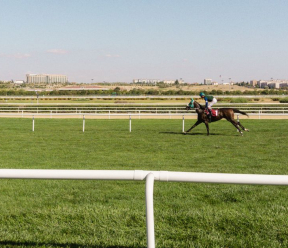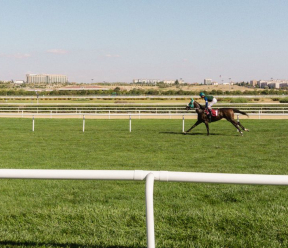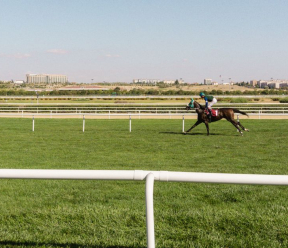

The Thoroughbred is the animal kingdom’s Formula 1 athlete because it is purpose-bred, precision-trained and campaigned at the outer edge of physiology, where marginal gains decide outcomes and the cost of error is measured in welfare, not just prize money. The comparison is not decorative. Elite motorsport and elite racing share the same performance-science logic, the same appetite for data, and the same obligation to protect the athlete.
Table of Contents
-
What makes a Thoroughbred the Formula 1 athlete of the animal kingdom?
-
How does Animal Kingdom’s career show the engineering behind an elite equine athlete?
-
What can horse racing learn from Formula 1 about athlete welfare?
-
Why does data matter as much as bloodline in modern equine performance?
-
What does a Thoroughbred’s recovery routine look like after peak effort?
-
How did a Kentucky Derby winner become a global breeding asset?
-
What does the Formula 1 comparison mean for the future of equine welfare?
What makes a Thoroughbred the Formula 1 athlete of the animal kingdom?
The comparison rests on three legs: purpose-breeding for speed, a narrow competitive window, and a specialist support team behind every start. A Formula 1 car is not a modified road car, and a Thoroughbred is not a general-purpose horse. Both are engineered for one outcome.
Animal Kingdom is the worked example. Foaled on 20 March 2008, by Leroidesanimaux (BRZ) out of Dalicia (GER), he stood 16.2½ hands and compiled a record of 12 starts for 5 wins and 5 seconds, according to American Classic Pedigrees. His 2011 Kentucky Derby win on 7 May 2011 came before a record crowd of 164,858, at 21:1 from post 16 in his first race on dirt, per Wikipedia. One afternoon defined a career, exactly as a single grand prix can define a motorsport season.
How does Animal Kingdom’s career show the engineering behind an elite equine athlete?
Animal Kingdom’s campaign reads like a telemetry log. His first start came on 18 September 2010, when he finished second in an off-the-turf race, according to Wikipedia. He broke his maiden at Keeneland over Polytrack, then ran second on turf at Gulfstream Park on 3 March 2011 before winning the Grade III Spiral Stakes on 26 March 2011 by 2¾ lengths.
The six-week layoff before the Kentucky Derby was the defining management decision. Animal Kingdom became the first horse since Needles in 1956 to win the Derby off that break, per American Classic Pedigrees. He then finished second in the 2011 Preakness Stakes and fractured a hock in the Belmont Stakes. The return to top-level form culminated in the 2013 Dubai World Cup victory in 2:03.21 and a second in the Gulfstream Park Turf Handicap in 1:47.00, as recorded by Horse Racing Nation.
What can horse racing learn from Formula 1 about athlete welfare?
Horse racing can learn that welfare data is performance data. A study published in the January 2026 issue of JAVMA found that screening with accelerometer-based inertial measurement unit sensors and a trained algorithm can identify horses at higher risk of fatal musculoskeletal injury, according to the AVMA.
The study examined stride data from 28,481 races by 11,834 Thoroughbreds between July 2021 and May 2024. Horses with the highest algorithm-based risk score of 6 had a 44.6 times higher probability of a fatal musculoskeletal injury compared with horses with the lowest risk score of 1. The concentration of risk was stark: 118 horses at score 6 accounted for 0.4% of starts but 4.2%, or 1 in 25, suffered a fatal injury. The AAEP’s year-long six-sensor study of over 700 two-year-old Thoroughbreds concluded on 31 December 2025, with results expected in 2026. HISA’s 2025 Third Quarter Metrics Report also noted a slight uptick in racing-related equine fatalities compared with 2024.
Why does data matter as much as bloodline in modern equine performance?
Data matters because the old model of pedigree and eye has given way to sensors, rankings and risk scores, the same shift motorsport made from instinct to telemetry. Bloodline remains relevant, but it is now read alongside measurable output.
Animal Kingdom’s World’s Best Racehorse Rankings progression tells that story. He was rated 121 lb for the 2011 Kentucky Derby, 124 lb for his second in the 2012 Breeders’ Cup Mile, and 125 lb for the 2013 Dubai World Cup, each time measured against the season’s highweight, per American Classic Pedigrees. The breeding story is itself a dataset: Animal Kingdom is inbred 4×4 to Lyphard, and Leroidesanimaux was substituted for Kingmambo when Kingmambo was relieved of covering mares due to back problems. Dr. Chris Kawcak of Colorado State University and Dr. Kyla Ortved of the University of Pennsylvania are among the experts advancing sensor-based orthopaedic research, according to the AVMA.
What does a Thoroughbred’s recovery routine look like after peak effort?
Recovery is the discipline motorsport perfected: the race is the visible ten percent, and the recovery protocol is the other ninety percent. A Thoroughbred’s post-effort routine is built around veterinary oversight, controlled return to work, and monitoring for the kind of subtle change that modern sensors are designed to catch.
Non-invasive support services are now being structured around animal athletes. Equine Salt Therapy offers Licensed Business Opportunities and Master Licenses for Equine, Poultry, Swine and Companion Animals, with territories sold under US Patent 11,497,593 and CA 3019046, priced from $110,000 to $1,000,000. Recovery support of this kind sits alongside, never instead of, veterinary care. The AVMA’s reporting on sensor studies shows the industry is moving toward earlier detection of the subtle changes that precede injury, per the AVMA.
How did a Kentucky Derby winner become a global breeding asset?
Animal Kingdom was bred by Team Valor and foaled in Kentucky at Denali Stud, then purchased as a yearling for US$100,000 at the 2009 Keeneland September sale, according to American Classic Pedigrees. Arrowfield Stud acquired a majority interest after his second-place finish in the 2012 Breeders’ Cup Mile, and Darley took a minority interest after the 2013 Dubai World Cup.
He entered stud in 2013 during the Southern Hemisphere season at Arrowfield Stud in Australia. He stood the Northern Hemisphere seasons of 2014 to 2019 at Darley in Kentucky before being sold to Japanese interests, per American Classic Pedigrees. His 2013 Queen Anne Stakes at Ascot on 18 June 2013 ended in an 11th-place finish, as recorded by Horse Racing Nation. Notable progeny include Angel of Truth (AUS), Duopoly (USA), Oleksandra (AUS) and Regal Glory (USA). The name Animal Kingdom derives from his sire Leroidesanimaux, which means “King of the Animals.”
What does the Formula 1 comparison mean for the future of equine welfare?
The comparison is a responsibility, not a compliment. The more an animal athlete is engineered, the more the sport owes it in protection. The 2026 arrival of sensor study results from the AAEP’s six-sensor trial marks the next inflection point for the industry, according to the AVMA.
The commercial dimension is already shifting. Investors, breeders, stud farms and pharmaceutical companies now read welfare data as performance data. Animal Kingdom’s record proves the point: he was the first Kentucky Derby winner to win a Grade One race at age five, per American Classic Pedigrees. Longevity at the top depends on management, not just talent.
Key Takeaways
-
The Thoroughbred earns the Formula 1 comparison through purpose-breeding, a narrow performance window and a specialist support team behind every start.
-
Animal Kingdom was foaled 20 March 2008, by Leroidesanimaux (BRZ) out of Dalicia (GER), and stood 16.2½ hands.
-
Animal Kingdom won the 2011 Kentucky Derby on 7 May 2011 before a record crowd of 164,858, at 21:1 from post 16 in his first start on dirt.
-
A January 2026 JAVMA study of 28,481 races found horses with the highest sensor-based risk score had a 44.6 times higher probability of fatal musculoskeletal injury.
-
Animal Kingdom’s World’s Best Racehorse Rankings rose from 121 lb in 2011 to 125 lb in 2013, five pounds below the season co-highweights.
-
Animal Kingdom entered stud in 2013 at Arrowfield Stud in Australia, stood 2014 to 2019 at Darley in Kentucky, and was later sold to Japanese interests.
-
Equine Salt Therapy licenses territories for its animal wellness platform under US Patent 11,497,593 and CA 3019046, with pricing from $110,000 to $1,000,000.