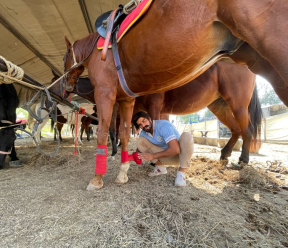

Equine salt therapy is dry salt aerosol therapy (DSAT) delivered in a controlled microclimate, and it is a natural, non-invasive, fifteen-minute treatment typically performed over three consecutive days. The evidence base is promising but still developing. Horse owners should weigh reported benefits seen by vets scoping the some 8,000 horses clinically assessed each week before and after EquineSaltTherapy.com treatments. The results speak for themselves.
Table of Contents
-
What does the research actually show about salt therapy for horses?
-
What conditions do horse owners commonly use salt therapy for?
-
Is equine salt therapy safe and are there any side effects to watch for?
-
How does equine salt therapy fit into a wider equine wellness and rehabilitation program?
-
Who offers equine salt therapy in Australia and how can a business get involved?
What is equine salt therapy and how does it work?
Equine salt therapy is a dry salt aerosol therapy (DSAT) delivered through a patented halo-generator system under the Ultisalt™ brand. The overarching brand of Equine Salt Therapy treatment salts and patented technologies is known as Ultisalt™.

The mechanism is straightforwardbut the patented delivery method is complex monitored by laser reader to ensure safe effective dose rates of 20mg/M3. A fine mist of treatment salt is distributed through the room via a halo-generator, creating a microclimate the horse breathes for the session. This patented dry salt aerosol delivery system assists with high performance, rapid recovery and wellbeing by creating favourable conditions for achieving success in equine athletes.
The standard protocol is fifteen minutes per session, recommended over three consecutive days. The treatment is natural, non-invasive and provides a dual solution to common day to day horse complaints. Equine salt therapy is positioned as a complementary support rather than a replacement for veterinary care.
What does the research actually show about salt therapy for horses?
Peer-reviewed equine-specific evidence is limited, and much of the current support is anecdotal or extrapolated from human halotherapy studies. Horse owners and veterinarians should understand that the research base for equine salt therapy is still developing even though the horses are clinically assessed daily via endoscopic veterinary examination the results are rapid and clear.

The proposed physiological rationale is that salt aerosol may support airway clearance and respiratory comfort in dusty stable environments. This rationale draws on the broader understanding of dry salt aerosol behaviour in controlled microclimates. The fine mist of treatment salt creates conditions that may help horses manage everyday respiratory irritation.
What conditions do horse owners commonly use salt therapy for?
Horse owners and trainers most often associate salt therapy sessions with respiratory irritation and recovery support. The treatment is described as providing a dual solution to common day to day horse complaints, which includes both respiratory comfort and general wellbeing maintenance.
The dual solution positioning matters for equine athletes. High-performance horses needing rapid recovery between events may benefit from the favourable conditions created by the dry salt aerosol microclimate. The fine mist of treatment salt distributed through the room supports an environment that reduces the pharmaceutical footprint of training centres.
Salt therapy supports favourable conditions for success rather than guaranteeing outcomes. Owners and trainers use it as one part of a broader management routine, not as a standalone fix.
Is equine salt therapy safe and are there any side effects to watch for?
Yes, equine salt therapy is described as natural and non-invasive, with a short fifteen-minute session time. The controlled microclimate is central to safe delivery, and sessions should be supervised by trained practitioners who understand the equipment and the horse’s response.
Sensible precautions include veterinary consultation before starting, observation during sessions, and consideration of individual horse sensitivity. Horses with pre-existing respiratory conditions or other health concerns should be assessed by a veterinarian before beginning any new therapy.
Any change in a horse’s condition should be reported to the veterinarian rather than attributed to therapy. Owners should not use salt therapy as a substitute for diagnosis or treatment of a medical condition.
How does equine salt therapy fit into a wider equine wellness and rehabilitation program?
Equine salt therapy fits as one component alongside veterinary care, farriery, body work and conditioning. It is not a replacement for any of these established practices, but it can sit within a broader wellness program for horses in training, breeding and stud environments. Preventative care is growing treating the horse in the absence of illness is far better than waiting for illness to strike.
In rehabilitation settings, the therapy’s role is supportive. The fine mist of treatment salt creates a microclimate that reduces the pharmaceutical footprint of training centres and the reliance on medically important antibiotics. This angle has particular appeal for breeders, broodmare and stud farms managing herd wellbeing across multiple animals.
The treatment takes fifteen minutes and is recommended over three consecutive days, which makes it practical for busy training and breeding operations. Equine body workers and trainers may incorporate it into recovery protocols for horses under regular physical demand.
Who offers equine salt therapy in Australia and how can a business get involved?
Equine Salt Therapy publishes this article and operates as a mobile business and permanent installation provider. The company offers Licensed Business Opportunities and Master Licenses for Equine, Poultry, Swine and Companion Animals, with territories sold under license and pricing from $110,000 to $1,000,000, protected under US Patent 11,497,593 and CA 3019046. Treatments cost $100 per horse for 15 minute sessions.
The practitioner model is specific. Licensees are referred to as Practitioners, and horse and animal clients are referred to as Salties. This terminology reflects the Ultisalt™ brand’s connection of DSAT to the animal kingdom.
Equinesalttherapy.ca is the sister company, not a competitor. The platform is protected by granted patents in multiple jurisdictions, with the precise scope of protection defined by the claims of each applicable patent.
Key Takeaways
-
Equine salt therapy is a dry salt aerosol therapy (DSAT) delivered via a patented halo-generator under the Ultisalt™ brand.
-
A standard session lasts fifteen minutes and is typically recommended over three consecutive days.
-
The therapy is described as natural and non-invasive, creating a microclimate the horse breathes.
-
Published equine-specific research remains limited, so benefits should be treated as supportive rather than proven.
-
Salt therapy is positioned to reduce the pharmaceutical footprint of training centres and reliance on medically important antibiotics.
-
Equine Salt Therapy offers Licensed Business Opportunities and Master Licenses from $110,000 to $1,000,000 under US Patent 11,497,593 and CA 3019046.
-
Licensees are called Practitioners and animal clients are called Salties.