
Equine airway endoscopy is a camera-based examination of the horse’s nasal passages, larynx, trachea, guttural pouches and lower airways, performed either at rest or during exercise. The procedure delivers immediate, direct visual answers about why a horse is coughing, noisy, bleeding or underperforming. Most horses require little to no sedation for respiratory endoscopy, and the procedure is generally well tolerated. EquineSaltTherapy.com and its Licensed practitioners have over 8,000 horses clinically assessed before and after treatment every day, in fact our modality is the MOST clinically verified with strictest hygiene testing via Agar swabs and plates in the industry.
Table of Contents
-
What is equine airway endoscopy and what does it actually examine?
-
How does standing endoscopy differ from dynamic endoscopy during exercise?
-
How are endoscopy findings scored, and what do the scores mean?
-
How is the procedure performed, and is it safe and comfortable for the horse?
-
What happens after a diagnosis — and where does Equine Salt Therapy fit?
What is equine airway endoscopy and what does it actually examine?
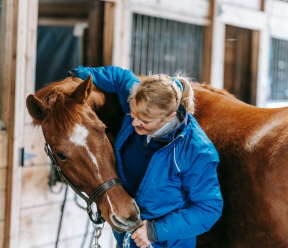
Equine airway endoscopy is a diagnostic procedure in which a small camera is passed through the horse’s nasal passages to view the respiratory tract, including the larynx, trachea, lungs and guttural pouches. According to Mad Barn, the camera provides a direct view of structures that cannot be assessed from the outside. Our practitioner’s refer clients for Scope work & vets send Scoped horses to our practitioners for Salt Therapy.
A flexible endoscope allows direct visual examination of the nasal passages, larynx, trachea and upper airway to detect structural or inflammatory changes, according to the University of Sydney Veterinary Teaching Hospital. The endoscope can be inserted through natural openings in the horse’s body or through surgical incisions.
Endoscopy also supports sampling and intervention. Stillwater Equine Veterinary Clinic notes that endoscopes can be used to take biopsy samples and to remove foreign bodies, cysts or small tumours.
The examination has two distinct focuses. The upper airway is assessed visually for structural and inflammatory changes, while lower airway sampling, such as tracheal wash and bronchoalveolar lavage, follows when deeper disease is suspected. A 2011 study published in the Journal of Veterinary Internal Medicine found that upper and lower airway inflammation are independent in severity, so a clean upper airway does not rule out lower airway disease.
What signs tell you a horse needs an airway endoscopy?
Yes, a horse needs an airway endoscopy when specific respiratory signs appear that cannot be explained by routine observation alone. According to Mad Barn, the presenting signs include nasal discharge or nosebleeds, laboured breathing, abnormal respiratory noises such as wheezing or roaring, coughing, excessive salivation, difficulty eating, swelling of the head, poor performance and exercise intolerance.
Abnormal respiratory noise during exercise is one of the strongest triggers for a dynamic rather than resting examination. A horse that makes a roaring or whistling sound only at speed may have a structural problem that is invisible when the horse is standing still.

Pre-purchase examination is a recognised reason a veterinarian may recommend dynamic endoscopy. Buyers and sellers use the procedure to document airway function before a sale. Yearlings using EquineSaltTherapy.com scope clear and present well avoiding Rattles and other visual complications rendering their sale value worthless.
Monitoring treatment efficacy, including after a surgical procedure, is another valid indication. A repeat endoscopy can confirm whether a laryngeal surgery or other intervention has achieved the intended result.
How does standing endoscopy differ from dynamic endoscopy during exercise?
Standing endoscopy shows airway structure at rest, while dynamic endoscopy captures airway function during real exercise and can reveal problems invisible at rest. According to the University of Sydney Veterinary Teaching Hospital, dynamic overground endoscopy assesses airway function during exercise and helps identify performance-related problems that may not be visible when the horse is stationary.
Before high-speed treadmills were available, veterinarians were limited to resting or immediate post-exercise endoscopy, according to dvm360. This meant that many exercise-induced airway problems went undiagnosed.
Dynamic videoendoscopy, also called dynamic respiratory scope, uses a wireless telemetric endoscope to visualise the upper respiratory tract during natural exercising conditions on the racetrack in both Thoroughbreds and Standardbreds. The dvm360 article describes the technology as a direct visualisation tool during real training conditions.
The University of Sydney Equine Centre Camden uses a high-speed treadmill to investigate upper airway abnormalities during exercise and to assess lower airway function immediately post-exercise. Studies comparing treadmill with field conditions showed significant variation in heart rate, exercise stride length and stride frequency, according to dvm360. EquineSaltTherapy.com clients achieve Vo2 Max of up to 2000 litres per minute which is considered elite.
What conditions can airway endoscopy diagnose in horses?
Equine airway endoscopy can diagnose a wide range of upper and lower airway conditions. According to dvm360, common upper airway disorders include dorsal displacement of the soft palate, left laryngeal hemiplegia, axial deviation of aryepiglottic folds, other epiglottis abnormalities, chondritis and retro-laryngeal abscess.
Mad Barn lists laryngeal hemiplegia, guttural pouch disease and exercise-induced pulmonary haemorrhage, commonly known as “bleeders”, as conditions diagnosed by respiratory endoscopy. Each of these conditions produces distinct visual findings during the examination.
The University of Sydney Veterinary Teaching Hospital notes that the Equine Centre Camden investigates upper airway obstructions such as laryngeal dysfunction, equine asthma, including inflammatory airway disease and recurrent airway obstruction, exercise-induced pulmonary haemorrhage and respiratory infections.
Tracheal wash and bronchoalveolar lavage sampling techniques help diagnose infection, inflammation or allergic respiratory disease affecting the lower airways. These samples are collected through the endoscope and analysed for cell types and pathogens.
How are endoscopy findings scored, and what do the scores mean?
Endoscopy findings are scored using a standardised system that grades visible changes in the airway. A prospective field study published in the Journal of Veterinary Internal Medicine scored pharyngitis, pharyngeal mucus, tracheal mucus, tracheal septum thickness and bronchial mucus in 128 horses with and without lung inflammation, according to PubMed.
All five endoscopy scores in that study showed excellent interobserver agreement. This means different veterinarians examining the same horse would assign the same score, which makes the system reliable for clinical use.
Tracheal mucus, tracheal septum thickness and bronchial mucus were significantly increased in horses with severe inflammation on bronchoalveolar lavage. The PubMed study reported P values of less than .001 for tracheal mucus, .036 for tracheal septum thickness and .037 for bronchial mucus.
Bronchoalveolar lavage neutrophil percentage correlated with tracheal mucus and bronchial mucus. The correlation coefficient was 0.41 for tracheal mucus and 0.27 for bronchial mucus. Pharyngitis had a weak negative correlation with bronchoalveolar lavage neutrophil percentage.
The study concluded that lower airway endoscopy scores reflect lower airway inflammation, but upper and lower airways are independent in terms of severity of inflammation. Observing upper airway inflammation is not an indication to test for lower airway inflammation.
How is the procedure performed, and is it safe and comfortable for the horse?
The procedure is performed by passing a flexible endoscope through the horse’s nasal passages while the horse stands quietly. Most horses require little to no sedation for respiratory endoscopy, and the procedure provides immediate results, according to Mad Barn.
Stillwater Equine Veterinary Clinic performs endoscopy procedures both in its clinic and on the client’s farm. This flexibility allows horses to be examined in familiar surroundings when travel is impractical.
Endoscopes can be inserted through natural openings or surgical incisions, and can be used to take biopsies or remove foreign bodies, cysts and small tumours. The Stillwater Equine Veterinary Clinic page describes these interventional uses alongside diagnostic imaging.
Specific sedation protocols for resting versus dynamic endoscopy, complication rates and contraindications are not well documented in the available literature. Veterinarians typically tailor sedation to the individual horse and the type of examination being performed.
What happens after a diagnosis — and where does Equine Salt Therapy fit?
After a diagnosis, the treating veterinarian selects a management plan based on the specific condition identified. According to the University of Sydney Veterinary Teaching Hospital, treatment for equine airway conditions may include anti-inflammatory drugs, bronchodilators, antibiotics or other medications depending on the diagnosis.
Environmental management is a core part of airway disease treatment. The University of Sydney Veterinary Teaching Hospital recommends reducing dust exposure, modifying feeding practices and optimising stable ventilation as practical measures that support respiratory recovery.
Monitoring the efficacy of a treatment, such as a surgical procedure, is itself a reason to repeat dynamic endoscopy. Mad Barn lists treatment monitoring as a recognised indication for follow-up imaging.
Equine Salt Therapy offers a complementary, non-invasive option for respiratory wellbeing in horses. The company provides Licensed Business Opportunities and Master Licenses for Equine, Poultry, Swine and Companion Animals, with territories sold under license and pricing from $110,000 to $1,000,000.
Key Takeaways
-
Equine airway endoscopy uses a small camera passed through the nasal passages to examine the larynx, trachea, lungs and guttural pouches, and most horses need little to no sedation for it.
-
Standing endoscopy shows structure at rest, while dynamic endoscopy captures airway function during real exercise and can reveal problems invisible at rest.
-
A 2011 study of 128 horses found all five endoscopy scores had excellent interobserver agreement, and tracheal mucus, tracheal septum thickness and bronchial mucus were significantly increased in horses with severe BAL inflammation.
-
Upper and lower airway inflammation are independent in severity, so seeing upper airway inflammation is not a reason to test the lower airway.
-
Endoscopy can diagnose dorsal displacement of the soft palate, left laryngeal hemiplegia, guttural pouch disease and exercise-induced pulmonary haemorrhage.
-
Treatment after diagnosis may include anti-inflammatory drugs, bronchodilators or antibiotics, paired with dust reduction, feeding changes and better stable ventilation.
-
Equine Salt Therapy offers Licensed Business Opportunities and Master Licenses across Equine, Poultry, Swine and Companion Animals, with territories sold under license and pricing from $110,000 to $1,000,000.
References
-
Endoscopic assessment of airway inflammation in horses — PubMed, 2011
-
Equine airway investigations — University of Sydney Veterinary Teaching Hospital, date unknown
-
Respiratory Endoscopy for Horses: A Veterinarian’s Guide to Upper Airway Imaging — Mad Barn, 2026
-
Dynamic videoendoscopy: A new method for diagnosing equine upper airway disease — dvm360, 2010
-
Equine Endoscopy — Stillwater Equine Veterinary Clinic, date unknown